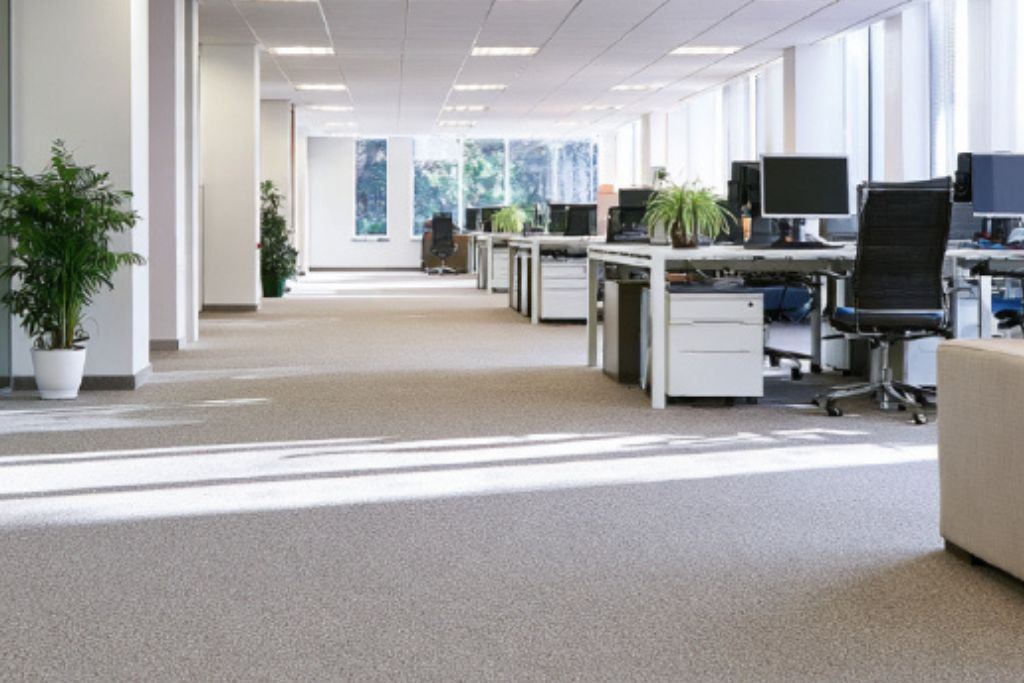
Carpet Care for Medical and Professional Office Buildings
Carpet in a medical or professional office building experiences a different type of use than carpet in most homes. Patients, clients, employees, vendors, and visitors may walk through the same entrances, hallways, reception areas, and waiting rooms throughout the entire day. Even an office that looks clean and organized can accumulate a significant amount of soil within its carpet over time.
For medical offices, dental practices, law firms, financial offices, corporate buildings, and other professional environments, the condition of the flooring also contributes to the overall appearance of the property. A clean, well-maintained carpet supports a polished environment, while dark traffic lanes, coffee stains, and heavily soiled entrance areas can quickly become noticeable.
Maintaining commercial carpet requires more than waiting until it looks dirty. Regular vacuuming, prompt attention to spills, entrance maintenance, and periodic professional carpet cleaning can all work together to keep heavily used office flooring in better condition.
Why Office Carpet Requires Consistent Maintenance
Commercial carpet receives concentrated traffic throughout the workday. Employees may follow the same route from the entrance to their workstations every morning, while patients and clients repeatedly move between reception desks, waiting rooms, hallways, and individual offices. Over time, these predictable traffic patterns can cause certain sections of carpet to become noticeably more soiled than others.
Much of this soil begins outside the building. Shoes can carry dust, sand, dirt, moisture, and other outdoor debris through the entrance. Some of that material is deposited immediately, while smaller particles may travel farther into the building as people continue walking. This is why entrance carpet and major walkways often begin looking dirty before carpet underneath desks or along the edges of rooms.
Daily office activity adds even more material. Coffee spills, food crumbs, tracked-in moisture, paper debris, and other everyday messes can accumulate alongside outdoor soil. In busy offices, even a strong janitorial routine may eventually need to be supplemented with deeper professional carpet cleaning.
Waiting Rooms and Reception Areas Need Extra Attention
Reception areas are among the most visible parts of a professional building. They are also frequently among the busiest. Nearly everyone who enters the office passes through the reception area, which concentrates foot traffic into a relatively small section of flooring.
Waiting rooms create additional challenges. Visitors may remain in the area for extended periods, move chairs, carry drinks, or enter during rainy weather. The pathways between the entrance, reception desk, seating, and hallways can gradually develop noticeable traffic lanes.
For medical offices in particular, waiting areas may see a steady flow of patients throughout the day. Carpet underneath chairs may remain relatively protected while the exposed flooring around seating areas receives continuous use. This uneven traffic can make differences in carpet appearance especially noticeable.
Instead of treating every section of carpet identically, office managers can focus additional maintenance on these heavily traveled spaces. Frequent vacuuming and planned professional cleaning can help manage buildup before entrance and waiting room carpet becomes significantly darker than surrounding areas.
Hallways and Common Areas Experience Constant Foot Traffic
Hallways are another area where commercial carpet tends to show wear and soil quickly. Unlike individual offices, where movement may be relatively limited, hallways serve as pathways for nearly everyone in the building. Employees, clients, patients, delivery personnel, and maintenance workers may all use the same corridors throughout the day.
Because the traffic is concentrated along predictable paths, soil can become embedded within the carpet fibers. Regular vacuuming removes loose debris, but eventually the carpet may begin looking dull even immediately after it has been vacuumed.
Common areas near elevators, stairways, restrooms, break rooms, and conference rooms can experience similar conditions. These spaces should be considered separately when creating a carpet maintenance plan because they may require more attention than lightly used private offices.
Entrance Carpet Is the First Line of Defense Against Outdoor Soil
One of the best ways to maintain office carpet is to reduce the amount of outdoor debris that reaches it in the first place. Building entrances are where much of the dirt begins, making entrance maintenance an important part of an overall carpet care strategy.
Appropriate entrance mats can capture some of the dirt and moisture from footwear before it travels farther into the building. However, mats need to be maintained to remain effective. A mat that is already heavily loaded with soil cannot capture as much additional debris from incoming foot traffic.
Weather can also dramatically change entrance conditions. Rain may result in wet shoes and muddy footprints, while dry conditions can increase the amount of dust and fine soil entering the building. Offices may need to adjust their maintenance routines during periods when outdoor conditions create additional flooring challenges.
Keeping entrances maintained does not eliminate the need for professional carpet cleaning, but it can reduce the amount of debris that eventually reaches waiting rooms, hallways, offices, and other interior areas.
Vacuuming Is Essential, but It Has Limits
Regular vacuuming is the foundation of any commercial carpet maintenance program. Removing dry soil before it becomes deeply embedded can help maintain the carpet’s appearance and reduce the amount of buildup between professional cleanings.
High-traffic sections generally need more frequent vacuuming than low-traffic areas. An entrance or waiting room that receives dozens of visitors every day should not necessarily follow the same maintenance schedule as a private office that is occupied by one employee.
Even frequent vacuuming has limitations. A vacuum primarily removes loose debris. Oils, sticky residues, spills, and soil that has become embedded through repeated foot traffic may remain behind. Eventually, the carpet can develop dark traffic lanes or a generally dull appearance despite being vacuumed regularly.
Professional carpet cleaning complements routine vacuuming by providing deeper cleaning when ordinary maintenance is no longer producing the desired results.
Managing Coffee, Food, and Everyday Office Carpet Stains
Coffee may be one of the most predictable carpet hazards in a professional office. Employees carry cups between break rooms, desks, conference rooms, and reception areas every day. A small spill can quickly create a noticeable dark spot, particularly on lighter commercial carpet.
Food can create similar problems. Employee lunches, catered meetings, office celebrations, and snacks in waiting areas can all introduce crumbs, grease, sauces, and beverages to carpeted spaces. Prompt attention can make these messes easier to manage.
When a spill occurs, avoid aggressively scrubbing the carpet. Scrubbing can spread the material across a larger area and may affect the carpet fibers. Liquids should generally be blotted using clean, absorbent material while following appropriate care recommendations for the specific carpet.
Office staff should also avoid repeatedly applying different cleaning products to a stubborn stain. Excessive detergent can leave residue behind, while mixing cleaning chemicals can create additional problems. When a stain repeatedly returns or does not respond to appropriate spot treatment, professional cleaning may be the better solution.
Why Carpet Spots Sometimes Return After Cleaning
Office managers may occasionally notice that a stain appears to disappear after spot cleaning only to become visible again later. There are several possible reasons for this. A spill may have penetrated deeper than the visible carpet fibers, allowing material to migrate back toward the surface as the area dries.
Cleaning residue can create another problem. If too much detergent is used and some remains within the carpet, the treated section may attract new soil. Over time, that area can darken and appear as though the original stain has returned.
Repeatedly adding more cleaner is not always the answer. Recurring spots may need to be professionally evaluated so the source of the discoloration can be addressed rather than continually treating only what is visible on the surface.
Carpet Care for Medical Offices and Healthcare Environments
Medical offices have many of the same carpet maintenance challenges as other professional buildings, but traffic patterns can be particularly demanding. Patients may move from entrances to check-in areas, waiting rooms, examination areas, and checkout desks throughout the day. Staff members may also walk the same hallways repeatedly as they move between work areas.
Because medical facilities have their own cleaning, sanitation, safety, and regulatory requirements, carpet cleaning should be coordinated with the facility’s established protocols. Professional carpet cleaning is one component of floor maintenance and should not be treated as a substitute for required environmental cleaning or disinfection procedures.
Facility managers should also consider how cleaning will affect access to patient areas and normal operations. Scheduling, drying time, equipment placement, and temporary access limitations may need to be planned carefully so the work can be completed with minimal disruption.
When arranging service, communicate any facility-specific requirements to the carpet cleaning provider in advance. Clear expectations allow the cleaning plan to be developed around the needs of the property.
Professional Offices Need Carpet That Supports Their Image
For law firms, financial offices, corporate buildings, consulting firms, real estate offices, and similar businesses, the appearance of the workplace contributes to the experience clients have when visiting. Flooring is a large visual component of that environment.
A client entering a reception area may not consciously think about whether the carpet was recently cleaned, but obvious stains, dark walkways, or neglected flooring can still affect the overall impression of the space. Well-maintained carpet contributes to an office that feels cared for and professionally managed.
Conference rooms deserve attention as well. These spaces may host prospective clients, important meetings, interviews, and presentations. Coffee and food are also commonly served during meetings, creating additional opportunities for spills.
Professional carpet care should therefore extend beyond the front entrance. Reception areas, conference rooms, hallways, executive offices, and other client-facing spaces can all be included in a comprehensive maintenance plan.
How Professional Carpet Cleaning Fits Into an Office Maintenance Plan
Commercial carpet care works best as an ongoing process rather than an occasional reaction to visibly dirty floors. Routine vacuuming removes loose debris, entrance mats help control tracked-in soil, and prompt spot treatment addresses many everyday spills. Professional cleaning provides the deeper level of maintenance needed as soil continues accumulating.
The appropriate cleaning frequency varies from one property to another. A busy medical office with a constant flow of patients may have different needs from a small professional office that sees only a handful of clients each day. Weather, carpet type, building layout, number of occupants, and existing maintenance practices can also affect the schedule.
Instead of waiting for every section of carpet to become equally dirty, businesses can prioritize areas according to traffic. Entrances and waiting rooms may require attention sooner than private offices, while heavily traveled corridors may need additional maintenance throughout the year.
Carpet manufacturer recommendations should also be considered when establishing a maintenance plan, particularly when the flooring is relatively new or covered by a warranty.
Scheduling Professional Carpet Cleaning Around Office Hours
One of the biggest considerations for a commercial property is minimizing disruption. A professional office cannot always stop operations simply because the carpet needs to be cleaned, and medical facilities may have even more complicated scheduling requirements.
Planning ahead allows businesses to identify the best time for service. Depending on the property and cleaning provider, service may be scheduled around slower periods or outside normal operating hours. Larger buildings may also benefit from cleaning different sections at different times rather than addressing every carpeted area at once.
Drying time should be considered when planning access to recently cleaned areas. Businesses should discuss expected conditions with the cleaning provider and determine whether any spaces need to remain temporarily unavailable.
Office managers should also communicate which furniture or small objects need to be moved before service. Clearing loose items, boxes, wastebaskets, and personal belongings from the floor can help make the cleaning process more efficient.
Signs Your Office Carpet May Need Professional Cleaning
Businesses do not have to wait for carpet to become severely dirty before scheduling professional service. Gradual soil accumulation can be difficult to recognize because employees see the flooring every day. By the time the difference becomes obvious, high-traffic sections may already be significantly darker than surrounding areas.
Common signs that deeper cleaning may be needed include visible traffic lanes, dull carpet that does not improve after vacuuming, multiple stubborn spots, heavily soiled entrance areas, and noticeable differences between exposed flooring and carpet underneath furniture.
A recent period of unusually heavy traffic can also be a reason to evaluate the carpet. Office events, seasonal increases in visitors, renovations, or extended periods of poor weather may introduce more soil than the building normally experiences.
Regularly evaluating carpet condition allows facility managers to schedule cleaning based on actual needs rather than waiting for flooring problems to become highly visible to patients, clients, or visitors.
Building a Better Carpet Care Plan for Your Office
Effective office carpet care starts with consistency. Focus daily and weekly maintenance on the sections receiving the greatest amount of use, including entrances, reception areas, waiting rooms, hallways, and other common pathways. Keep entrance mats clean, vacuum according to traffic levels, and address spills promptly before they become established stains.
Professional carpet cleaning can then be incorporated according to the property’s traffic, carpet condition, operational needs, and flooring manufacturer recommendations. This proactive approach makes carpet care part of routine facility maintenance instead of something addressed only when the floors become noticeably dirty.
For medical and professional office buildings, the goal is not simply cleaner-looking carpet. It is maintaining flooring that supports the overall appearance and operation of a busy professional environment.
Professional Carpet Cleaning for Medical and Professional Offices
Medical offices and professional buildings place constant demands on their carpet. Repeated foot traffic, outdoor soil, coffee spills, waiting room activity, and everyday business operations can gradually leave flooring looking dull and worn even when regular vacuuming is already part of the maintenance routine.
A combination of preventative maintenance, routine vacuuming, prompt stain response, and periodic professional carpet cleaning can help businesses manage these challenges. Paying additional attention to high-traffic areas can also help keep flooring looking more consistent throughout the property.
Miracle Steam Pros provides professional commercial carpet cleaning in Frisco and surrounding North Texas communities. If the carpet in your medical office, professional building, waiting room, or other commercial property needs deeper cleaning, contact Miracle Steam Pros to discuss a carpet care plan for your facility.
Frequently Asked Questions
How often should carpet in a medical or professional office be cleaned?
There is no single schedule that works for every property. Traffic volume, carpet type, building use, weather, maintenance practices, and manufacturer recommendations can all affect cleaning frequency. High-traffic areas may need attention sooner than private offices or other lightly used spaces.
Which areas of an office usually get the dirtiest?
Entrances, reception areas, waiting rooms, hallways, elevator areas, conference rooms, and common pathways typically accumulate soil faster because they receive concentrated foot traffic throughout the day.
Can professional carpet cleaning remove office coffee stains?
Many coffee spots can be improved or removed with appropriate professional treatment, although results depend on the carpet, age of the stain, previous cleaning attempts, and what was in the beverage. Point out known stains before cleaning so they can be evaluated.
Can carpet cleaning be performed in a medical office?
Professional carpet cleaning can be part of flooring maintenance in medical offices, but it should be coordinated with the facility’s cleaning, safety, sanitation, and operational requirements. Facility-specific requirements should be discussed with the cleaning provider before service.
How can an office keep carpet cleaner between professional services?
Regular vacuuming, maintained entrance mats, prompt spill response, appropriate spot treatment, and extra attention to high-traffic sections can help manage soil between professional carpet cleaning appointments.