New Puppy at Home? A Carpet Care Guide for Pet Owners
Bringing home a new puppy is exciting, but it also brings a fresh wave of messes into the house. Between house-training accidents, muddy paws, shedding, spilled water bowls, and the occasional chewed-up treat, your carpet may experience more activity during the first few months of puppy ownership than it has in years.
Fortunately, having a puppy does not mean accepting permanently stained or smelly carpet. A few preventative habits and a quick response when accidents happen can make carpet care much easier. The goal is to keep everyday dirt under control while preventing urine, moisture, and other messes from becoming deeply embedded in the carpet.
Whether you recently brought home your first puppy or are adding another dog to the family, this guide covers practical ways to protect your carpet while your new pet adjusts to life at home.
Prepare Your Carpet Before Bringing Your Puppy Home
Carpet care becomes much easier when you prepare before your puppy arrives. Start by thinking about where your puppy will spend most of its time. During house training, limiting access to certain rooms can reduce the number of carpeted areas you need to monitor. Baby gates, closed doors, and designated puppy areas can help keep early accidents contained.
Consider placing washable mats around food and water bowls, near exterior doors, and in other places where messes are likely. Puppies are not known for drinking neatly, and water splashed around a bowl can repeatedly dampen nearby flooring. A washable mat creates an easier surface to clean while helping protect the carpet underneath.
This is also a good time to establish a cleanup station. Keep clean absorbent towels and appropriate carpet-cleaning supplies somewhere easy to reach. When an accident happens, being able to respond immediately is much better than spending several minutes searching for cleaning products while urine or another liquid continues soaking into the carpet.
House-Training Accidents Need Quick Attention
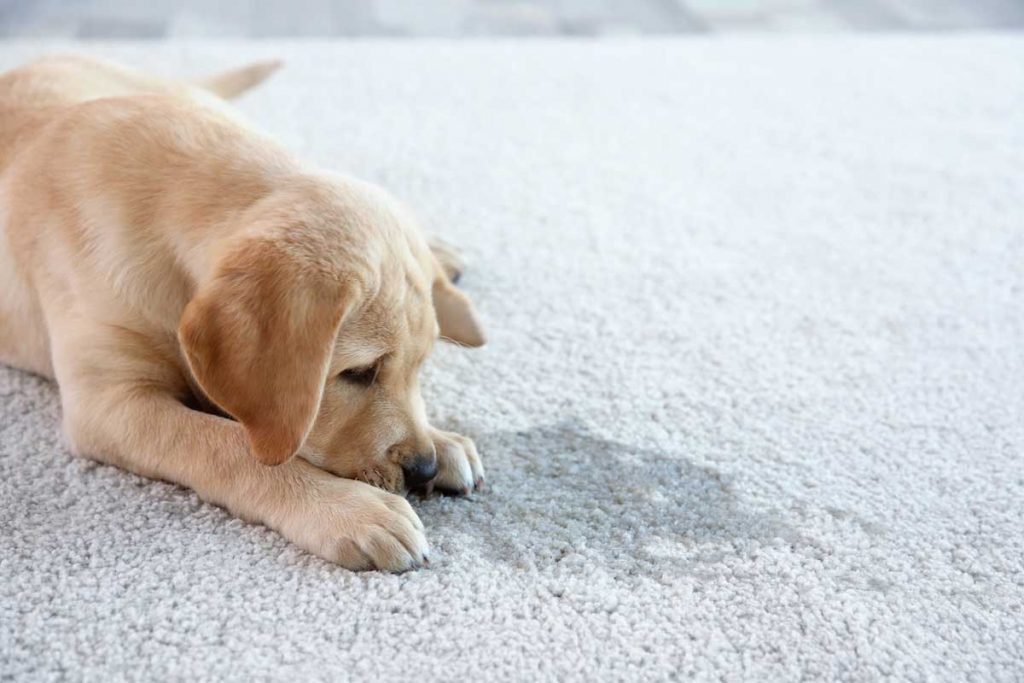
Accidents are a normal part of bringing home a puppy. Even puppies that are learning quickly may occasionally urinate on the carpet, particularly when they become excited, distracted, or are left too long between trips outside.
When an accident happens, address it as soon as possible. Use clean, absorbent towels to blot the affected area and remove as much liquid as you can. Apply pressure rather than aggressively rubbing the carpet. Scrubbing can spread contamination across a larger area and may affect the appearance of the carpet fibers.
One of the biggest mistakes pet owners can make is focusing only on what they can see. Carpet has multiple layers, and enough urine can move through the visible fibers into the backing and padding underneath. A spot may look clean at the surface while urine remains deeper in the flooring.
This is one reason repeated or larger pet accidents can become difficult to handle with ordinary household spot cleaning. If contamination has reached the padding, treating only the carpet surface may not completely address the source of the stain or odor.
Why Puppy Urine Odors Can Keep Coming Back
A pet urine stain that disappears does not always mean the entire problem is gone. Urine can penetrate farther into carpet than many homeowners realize, especially if an accident sits unnoticed for a while. Surface cleaning may improve the appearance while leaving contamination underneath.
This can lead to an especially frustrating situation where the room smells clean immediately after treatment but the pet odor eventually returns. Changes in moisture and indoor conditions can sometimes make old contamination more noticeable again.
Using more fragrance is not necessarily the answer. Air fresheners, scented powders, and deodorizing sprays may temporarily cover an unpleasant smell, but masking an odor is different from removing its source. If urine remains within the carpet or padding, fragrance alone will not solve the underlying problem.
Recurring odor may be a sign that the affected area needs professional pet stain and odor treatment. A carpet cleaning professional can evaluate the contamination and determine what level of treatment is appropriate based on how deeply the accident affected the flooring.
Repeated Accidents in the Same Spot Can Become a Bigger Problem
Some puppies return to the same area repeatedly. From a carpet-care perspective, this can create a much more significant problem than one isolated accident. Every additional incident introduces more urine into an area that may already have contamination below the surface.
Repeated spot cleaning can also introduce additional moisture and cleaning products into the carpet. If too much detergent is used, residue may remain behind and begin attracting dirt. If too much liquid is applied, the affected area can become unnecessarily saturated.
If your puppy continues having accidents in the same place, address both the pet behavior and the carpet. Proper house training can help prevent future incidents, while appropriate cleaning can address contamination that may already be present.
Once an area has experienced numerous accidents, professional treatment may be more effective than repeatedly applying household cleaners to the surface.
Be Careful With DIY Pet Stain Treatments
When a puppy has an accident, it can be tempting to reach for whatever cleaning product happens to be nearby. However, not every household cleaner is suitable for carpet, and different carpet fibers and dyes can respond differently to cleaning solutions.
Before applying any product, check your carpet manufacturer’s care recommendations and follow the cleaning product directions carefully. When appropriate, test the solution in an inconspicuous location before applying it to a visible area.
Avoid combining multiple cleaning chemicals in an attempt to create a stronger treatment. Mixing products can produce unpredictable results and may leave significant residue behind. If one appropriate treatment does not solve the problem, continually adding more products is unlikely to be the best approach.
You should also avoid soaking the carpet with excessive amounts of cleaner. More solution does not automatically mean better stain removal. Excess moisture can carry contamination deeper into the flooring and increase drying time.
Prevent Muddy Paws From Taking Over Your Carpet
Urine is not the only carpet challenge that comes with a new puppy. Dogs can bring an impressive amount of outdoor dirt into a home, particularly after rain or time spent playing in the yard. A puppy can run from the back door through several carpeted rooms before you have time to notice the muddy paw prints following behind.
Create a routine for cleaning paws before your puppy enters carpeted areas. Keeping a towel near the door makes it easy to wipe away mud and moisture before your dog runs farther into the house. During especially wet weather, an absorbent mat near the entrance can provide additional protection.
Entry mats need maintenance too. Shake them out, vacuum them, or wash them according to their care instructions. Once a mat becomes heavily loaded with dirt, it becomes less effective at preventing that soil from traveling farther into the home.
Developing a paw-cleaning routine while your dog is young can also make the process easier as the puppy grows. What starts as carpet protection can become a normal part of coming inside after walks or outdoor play.
Stay Ahead of Pet Hair and Everyday Dirt
Depending on the breed, a puppy may introduce a significant amount of hair into your home. Even dogs that shed relatively little can contribute dander, outdoor dirt, and other particles that eventually settle into carpet.
Regular vacuuming is one of the most effective ways to control this everyday buildup. Concentrate on the rooms where your puppy spends the most time, including favorite sleeping spots and common pathways through the home. These areas may require more frequent attention than rooms the dog rarely enters.
Vacuum slowly enough to give the equipment an opportunity to collect debris from between the carpet fibers. Keep the vacuum itself maintained by emptying the collection bin, cleaning or replacing filters as recommended, and removing hair wrapped around the brush roll.
Regular grooming can also help reduce the amount of loose hair that reaches the floor. Carpet maintenance is easier when some of the shedding is addressed before the hair ever reaches your carpet.
Protect Carpet Around Food and Water Bowls
Puppies can turn an ordinary drink of water into a surprisingly large mess. Water can drip from their mouths, bowls can be pushed across the floor, and excited puppies may step directly into their food or water before running away.
If your puppy’s feeding area is near carpet, consider placing the bowls on a large washable mat or another appropriate protective surface. The covering should extend far enough around the bowls to catch splashes and dropped food.
Clean the area regularly rather than allowing food particles and moisture to accumulate. Repeated moisture exposure is something you want to avoid around carpet, particularly if water can reach underneath a mat and remain there unnoticed.
Periodically lift the protective covering and check underneath it. A mat can protect carpet from everyday spills, but trapped moisture should not be allowed to sit against the flooring.
Watch What Your Puppy Carries Onto the Carpet
Puppies explore the world with their mouths, which means all kinds of unexpected objects can end up on your carpet. Treats, wet toys, sticks, leaves, grass, dirt, and pieces of chewed items can quickly become carpet messes.
Some treats and toys can also leave behind oils, dyes, or residue. Keeping particularly messy items in areas with easy-to-clean flooring can reduce the chance of difficult stains.
Check puppy play areas regularly and vacuum crumbs or debris before they are repeatedly walked into the carpet. Small pieces that are easy to remove today can become much more difficult to notice once they have been ground deeper between the fibers.
Create Puppy-Friendly Areas That Are Easier to Maintain
You do not necessarily need to keep your puppy away from every carpeted room. Instead, think strategically about where the puppy spends unsupervised time, eats, plays, and sleeps.
Washable rugs and protective coverings can be useful in high-risk areas, provided they are appropriate for the flooring underneath. Puppy pens and gates can also help prevent a young dog from wandering into several rooms during the early stages of house training.
As your puppy becomes more reliable, access to the rest of the home can gradually increase. During the first few months, however, controlling the environment can make both house training and carpet maintenance considerably easier.
What to Do When You Discover an Old Pet Accident
Not every accident is caught immediately. You may discover a stain behind furniture, notice an unfamiliar odor, or realize your puppy has been using a rarely visited corner of the house.
Older pet stains can be more difficult to address because the contamination has had more time to penetrate and dry within the carpet. Avoid immediately flooding the area with large amounts of household cleaner. Excessive moisture may spread the affected area without completely removing the source.
If the stain is significant, has an odor, or appears to have occurred repeatedly, professional treatment may be the better option. A carpet cleaning professional can assess the affected area and determine whether specialized pet stain and odor treatment is needed.
When Regular Carpet Cleaning Is Not Enough
General professional carpet cleaning and specialized pet treatment do not always address exactly the same problems. Routine cleaning is designed to remove accumulated soil and refresh carpet, while pet contamination may require additional attention to specific affected areas.
If your puppy has had several accidents, tell your carpet cleaner where they occurred rather than assuming ordinary cleaning will automatically address them. Knowing the location and nature of the problem allows the cleaner to evaluate those areas specifically.
This is particularly important when odors continue returning. A carpet can appear visibly clean while contamination remains underneath the surface. Treating the actual source is more effective than simply trying to make the room smell better temporarily.
When Should Pet Owners Schedule Professional Carpet Cleaning?
There is no single schedule that works for every pet-friendly home. A household with one small dog that rarely sheds may have very different cleaning needs than a home with multiple large dogs, frequent outdoor activity, and several carpeted rooms.
Pay attention to the actual condition of your carpet. If high-traffic areas are becoming dull, pet hair is increasingly difficult to remove, stains continue returning, or odors remain despite routine maintenance, it may be time for professional carpet cleaning.
Professional cleaning can also be useful after the puppy has made significant progress with house training. Once accidents have become less frequent, a deeper cleaning and targeted treatment of problem areas can help refresh carpet that experienced the most difficult stages of puppyhood.
Enjoy Your New Puppy Without Giving Up on Clean Carpet
A new puppy will almost certainly create a few carpet messes along the way. The key is preventing those temporary accidents from becoming long-term carpet problems. Quick cleanup, regular vacuuming, clean paws, protected feeding areas, and appropriate treatment of urine accidents can make a major difference.
Pay particular attention to recurring stains and odors. When urine has reached below the carpet surface, repeatedly spraying or scrubbing the visible fibers may not address the entire problem. Professional pet stain and odor treatment can help when ordinary household maintenance is no longer enough.
Miracle Steam Pros provides professional carpet cleaning and pet stain and odor removal for homeowners in Frisco and surrounding North Texas communities. If puppy accidents, muddy paws, or everyday pet activity have left your carpet needing a deeper clean, contact Miracle Steam Pros for professional carpet care.
Frequently Asked Questions
How should I clean fresh puppy urine from carpet?
Blot the area promptly with clean, absorbent towels to remove as much liquid as possible. Avoid aggressive scrubbing or oversaturating the carpet. Use only a treatment appropriate for your carpet and follow the product and carpet manufacturer’s care instructions.
Why does my carpet still smell like puppy urine after cleaning?
Urine may have penetrated through the carpet fibers into the backing or padding underneath. Surface cleaning can improve the visible carpet without completely addressing deeper contamination, which may allow the odor to return.
Can professional carpet cleaning remove pet stains and odors?
Professional cleaning can address many pet-related carpet problems, but urine contamination may require specialized pet stain and odor treatment. The appropriate method depends on the type, severity, and depth of the contamination.
How can I protect my carpet while house training a puppy?
Limit access to certain rooms when appropriate, take the puppy outside regularly, keep cleanup supplies nearby, use washable mats in high-risk areas, wipe muddy paws at the door, and respond to accidents as quickly as possible.
Should I professionally clean my carpet after house training my puppy?
Professional cleaning can be useful after the most accident-prone stage of house training, especially if the carpet has recurring stains, odors, or heavily used areas. Any known pet accident locations should be pointed out so they can be evaluated for additional treatment.